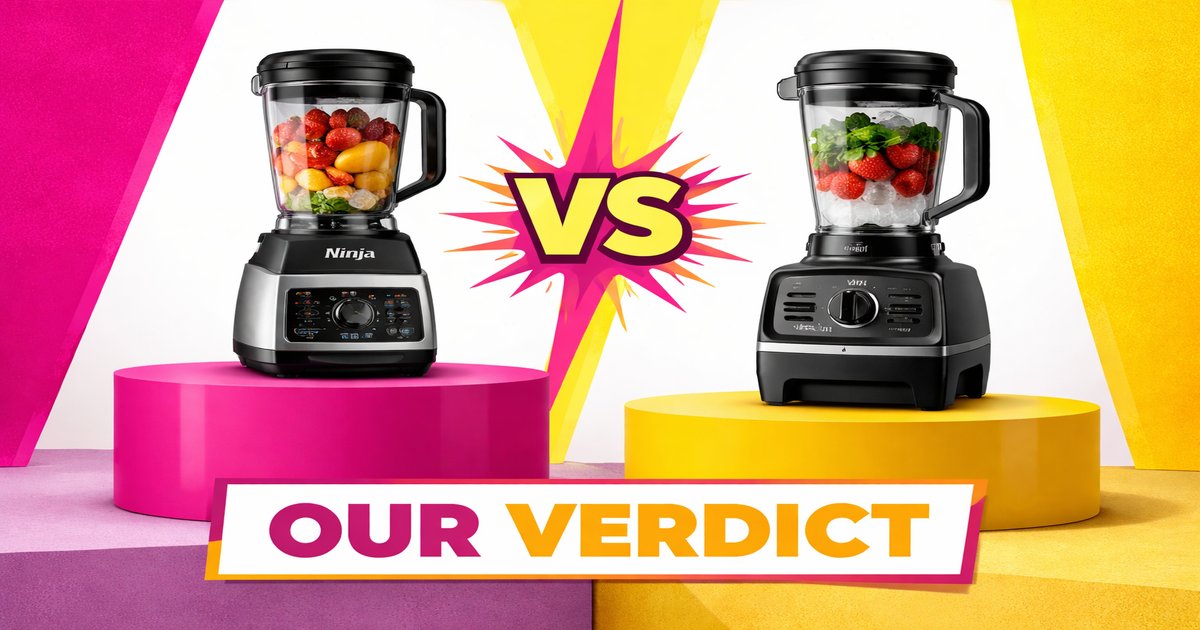
You’re at that point where your morning smoothie ritual isn’t just a trend—it’s a lifestyle. But your old blender is sputtering, and now you’re facing the classic showdown: Ninja versus Vitamix. Which one will do justice to your kale, protein shakes, and maybe even a cheeky margarita on Friday night?
| Specification | Ninja | Vitamix |
|---|---|---|
| Power (Watts) | 1,200 | 1,400 |
| Blade Material | Stainless Steel | Hardened Stainless Steel |
| Variable Speed Control | ✓ | ✓ |
| Preset Programs | 3 | 10 |
| Warranty | 1 year | 7 years |
| Price Range | $100 – $200 | $350 – $600 |
✅ ninja Pros
- Affordable price point
- Compact design fits small kitchens
- Multiple preset blending functions
❌ ninja Cons
- Noisy operation
- Short warranty period
✅ vitamix Pros
- Superior blending performance
- Long-lasting durability
- Extensive warranty coverage
❌ vitamix Cons
- High price tag
- Larger footprint on countertops
Performance: Power and Precision
When it comes to power, Vitamix edges out with its 1,400-watt motor, effortlessly pulverizing anything from ice to nuts. It’s like having a mini lawnmower in your kitchen. Ninja, with its 1,200 watts, isn’t a slouch either, but it does struggle with the toughest ingredients. For smoothies, soups, or nut butter, the Vitamix just gets it done faster and smoother. If you’re routinely blending tough stuff, the Vitamix’s performance is worth the splurge.
Build Quality: Durability and Design
Vitamix is built like a tank with hardened stainless steel blades and a robust motor that withstands the test of time. Its generous warranty speaks volumes about its confidence in product longevity. Ninja, on the other hand, doesn’t scream durability. It’s more of a lightweight contender in this match-up. If you move frequently or have limited space, Ninja’s compact design is a plus, but its shorter warranty suggests it’s not meant for a lifetime of use.
Value: Cost vs. Benefits
Ninja offers a budget-friendly alternative with decent features for someone dabbling in healthy living without breaking the bank. Vitamix, with its higher price, is an investment for those serious about blending as a daily ritual. The upfront cost is steep, but if you think of it as a long-term kitchen partner, it pays off in versatility and reliability. For the occasional user, Ninja’s price-to-performance ratio is hard to beat.
What most people won’t tell you is that both blenders can be a pain with noise levels. Vitamix can sound like a jet engine, while Ninja’s not much quieter. Also, Ninja’s preset programs are great, but they can be inconsistent. Real talk: if you’re blending early in the morning, your neighbors will know.
Our Final Verdict: Which One Should You Buy?
If you’re a budget-conscious consumer or live in a small space, Ninja is your go-to. It offers good features without burning a hole in your pocket. However, if you’re an avid cook or smoothie enthusiast who values performance and longevity, Vitamix is the blender for you. It’s an investment that pays dividends in power and reliability.
How does the size of each blender affect countertop space?
Ninja’s compact design makes it more suitable for small kitchens, while Vitamix’s larger base requires more countertop space but offers better stability during operation.
Is it worth paying more for the Vitamix warranty?
Absolutely. The Vitamix warranty is comprehensive, covering parts and labor for seven years, reflecting its durability and the company’s confidence in the product.
Can I make hot soups with both blenders?
Yes, both can make hot soups through blade friction, but Vitamix does it more efficiently due to its powerful motor and superior blade technology.