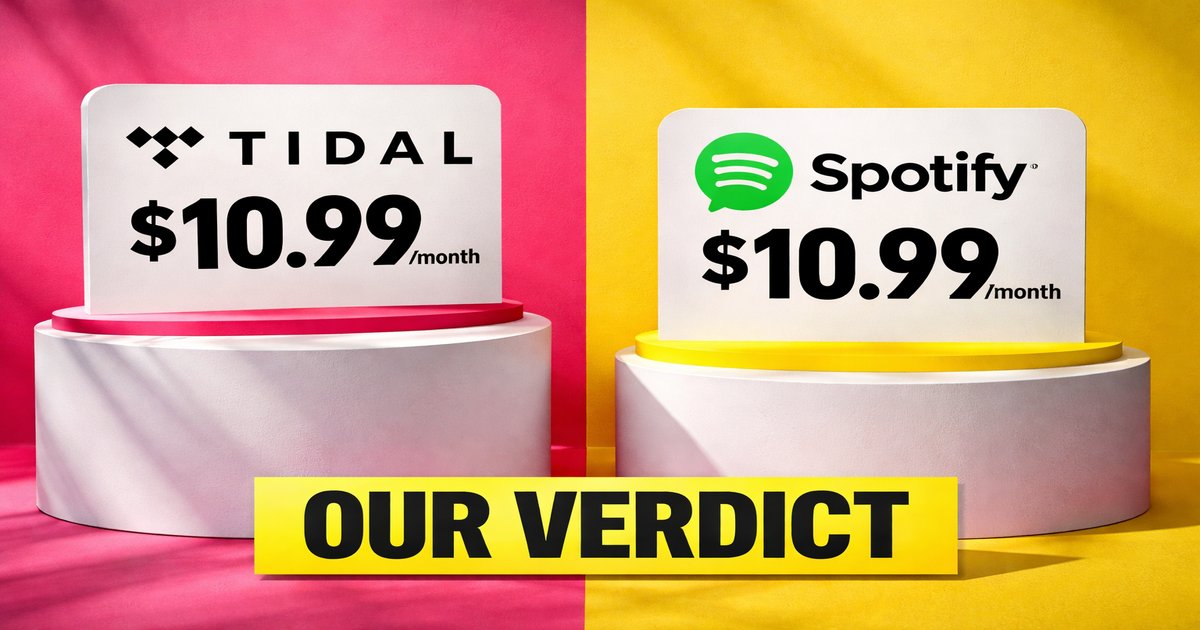
You’re stuck in the middle of a streaming war, trying to decide where to invest your hard-earned cash for the best music experience. Tidal and Spotify both offer compelling features, but their pricing structures might sway your decision. Let’s break it down and find out which one deserves your subscription dollars.
| Feature | Tidal | Spotify |
|---|---|---|
| Monthly Price (Standard) | $9.99 | $9.99 |
| HiFi/HiRes Audio | $19.99 ✓ | $19.99 ✗ |
| Family Plan | $14.99 | $15.99 |
| Student Discount | ✓ | ✓ |
| Offline Listening | ✓ | ✓ |
| Exclusive Content | ✓ | ✗ |
✅ tidal Pros
- Superior HiFi/HiRes audio quality for audiophiles.
- Exclusive content and early releases.
- Competitive family plan pricing.
❌ tidal Cons
- Costly HiFi plan compared to standard offerings.
- Smaller music library than Spotify.
- UI can feel cluttered and less intuitive.
✅ spotify price Pros
- Massive music library with diverse genres.
- Intuitive and user-friendly interface.
- Great for curated playlists and music discovery.
❌ spotify price Cons
- No HiFi audio option available as of now.
- Slightly more expensive family plan.
- Limited exclusive content compared to Tidal.
Audio Quality and Content
Tidal shines when it comes to audio quality. If you’re the kind of person who can tell the difference between MP3 and FLAC by ear, Tidal’s HiFi and HiRes options are a dream come true. Even if you’re not an audiophile, the difference is noticeable with a decent pair of headphones. Spotify, on the other hand, is yet to roll out its promised HiFi tier, leaving you with standard quality streams. However, Spotify makes up for this with a vast library and algorithm-driven playlists that keep your listening experience fresh and engaging.
User Experience and Interface
Spotify nails the user experience with its clean, intuitive interface that makes finding new music a breeze. The Discover Weekly and Daily Mix playlists are a testament to its powerful recommendation engine. Tidal, while offering a decent interface, often feels cluttered and less intuitive, especially when you’re trying to navigate through exclusive content and various audio settings. If you value ease of use and discovery, Spotify has the upper hand here.
Value for Money
Both platforms offer a standard plan at $9.99, but Tidal’s HiFi plan at $19.99 can feel steep unless you value high-quality audio. Spotify’s family plan costs a dollar more than Tidal’s, but considering Spotify’s extensive library and user-friendly experience, it feels justified. Students can benefit from discounts on both services, but if you’re a family or someone who appreciates high-quality audio, Tidal might offer better value.
While both services boast offline listening, Tidal’s download feature can be cumbersome, often requiring more steps than Spotify’s straightforward process. Also, Tidal’s exclusive content is appealing, but if you’re not into the artists they feature, it might not be worth the premium. Spotify’s constant updates and playlist additions can be a double-edged sword, sometimes cluttering your saved music.
Our Final Verdict: Which One Should You Buy?
For audiophiles and those who crave exclusive content, Tidal is your go-to. Its superior audio quality and artist-first approach make it ideal for music purists. If you’re more about discovering new music effortlessly and enjoying a seamless user experience, Spotify remains unbeatable. Families might lean towards Tidal for better pricing, but Spotify’s vast library could justify the extra dollar.
Can I use Tidal and Spotify offline?
Yes, both platforms allow offline listening, though Tidal’s download process is less streamlined.
Do either offer a free trial?
Both Tidal and Spotify offer free trials, typically ranging from 30 days to 3 months, depending on promotions.
Is there a noticeable difference in audio quality between Tidal and Spotify?
Yes, Tidal offers HiFi and HiRes options that are superior to Spotify’s current standard quality, noticeable with good headphones.