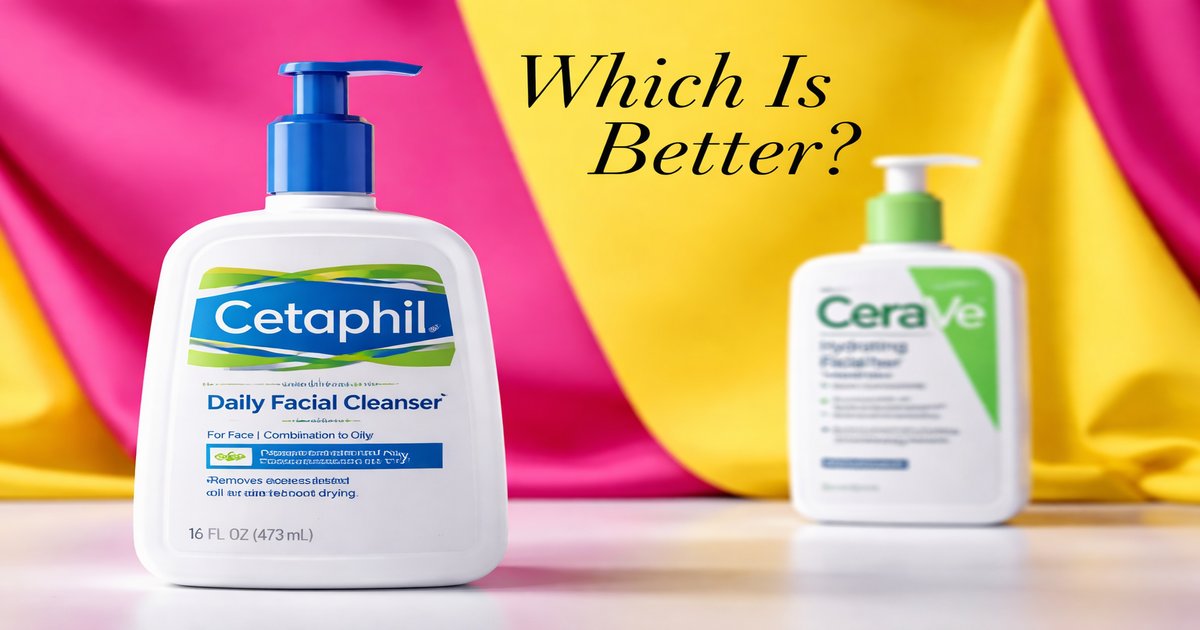
You’ve probably stood in the skincare aisle, staring at Cetaphil and CeraVe, wondering which one is worth your hard-earned cash. Both promise gentle, effective care, but they have their own quirks that could make or break your skincare routine. Let’s cut through the noise and see which one deserves a spot in your bathroom cabinet.
| Feature | Cetaphil | CeraVe |
|---|---|---|
| Hydration | Moderate | High |
| Active Ingredients | Glycerin, Panthenol | Ceramides, Hyaluronic Acid |
| Sensitive Skin Friendly | ✓ | ✓ |
| Fragrance-free | ✓ | ✓ |
| Comedogenic Rating | Low | Low |
| Price Range | Lower | Moderate |
| Availability | Wide | Wide |
✅ cetaphil Pros
- Affordable for budget-conscious users
- Gentle on extremely sensitive skin
- Widely available in most drugstores
❌ cetaphil Cons
- Basic formulation lacks advanced hydration
- Not ideal for severely dry skin
✅ cerave Pros
- Contains ceramides and hyaluronic acid for superior hydration
- Great for dry and compromised skin barriers
- Fragrance-free and non-comedogenic
❌ cerave Cons
- Pricier compared to Cetaphil
- Some users report slight greasiness
Performance
Cetaphil is your basic but reliable friend—dependable for sensitive skin but not going to win any awards for intense hydration. It does what it says on the tin: cleans your skin without irritation. CeraVe, however, goes the extra mile. With its ceramides and hyaluronic acid, it’s like a spa day in a bottle. If your skin is thirstier than a desert cactus, CeraVe is the one to quench it. For those battling flaky skin, CeraVe offers that extra layer of defense without breaking the bank too much.
Build Quality
Both brands offer sturdy, no-frills packaging that survives bathroom humidity without falling apart. Cetaphil’s packaging is straightforward and functional, perfect for those who don’t want to fuss with complicated designs. CeraVe, on the other hand, has a more clinical look, which mirrors its dermatological focus. The pumps on CeraVe bottles are more robust, making it more user-friendly if you’re constantly on the move or have slippery hands post-shower.
Value
Cetaphil is the go-to for those who want effective skincare without the bells and whistles. It’s easier on the wallet, which is a big win if you’re stocking up for a family. CeraVe, while pricier, justifies the extra cost with its multitasking formula. You’re not just getting a moisturizer; you’re investing in a product that strengthens your skin barrier and keeps it hydrated longer. If you’re looking to consolidate products, CeraVe offers more bang for your buck in the long run.
While Cetaphil is a staple for many, its formula can feel underwhelming if you’re dealing with serious skin issues. On the flip side, CeraVe’s richness might be too much for oily skin types. Many reviews skip over the fact that Cetaphil’s simplicity can be both a pro and a con, depending on what your skin truly needs.
Our Final Verdict: Which One Should You Buy?
If you’re someone who loves simplicity and has relatively uncomplicated skin, Cetaphil is your best bet. It’s a no-nonsense cleanser and moisturizer that won’t empty your pockets. However, if you deal with dry or compromised skin and are willing to spend a bit more for added benefits, CeraVe is the smarter choice. Its advanced ingredients and superior hydration capabilities make it a worthwhile investment for those needing extra skin support.
Is CeraVe suitable for oily skin?
Yes, CeraVe offers formulations like their foaming facial cleanser that are specifically designed for oily skin types, balancing hydration without adding extra oil.
Can Cetaphil be used for body care?
Absolutely, Cetaphil offers products like their gentle skin cleanser that are versatile enough for use on both the face and body, making them convenient for full-body care.
Does CeraVe help with aging skin?
CeraVe’s products with hyaluronic acid and ceramides can help maintain skin elasticity and hydration, which are crucial for reducing signs of aging.