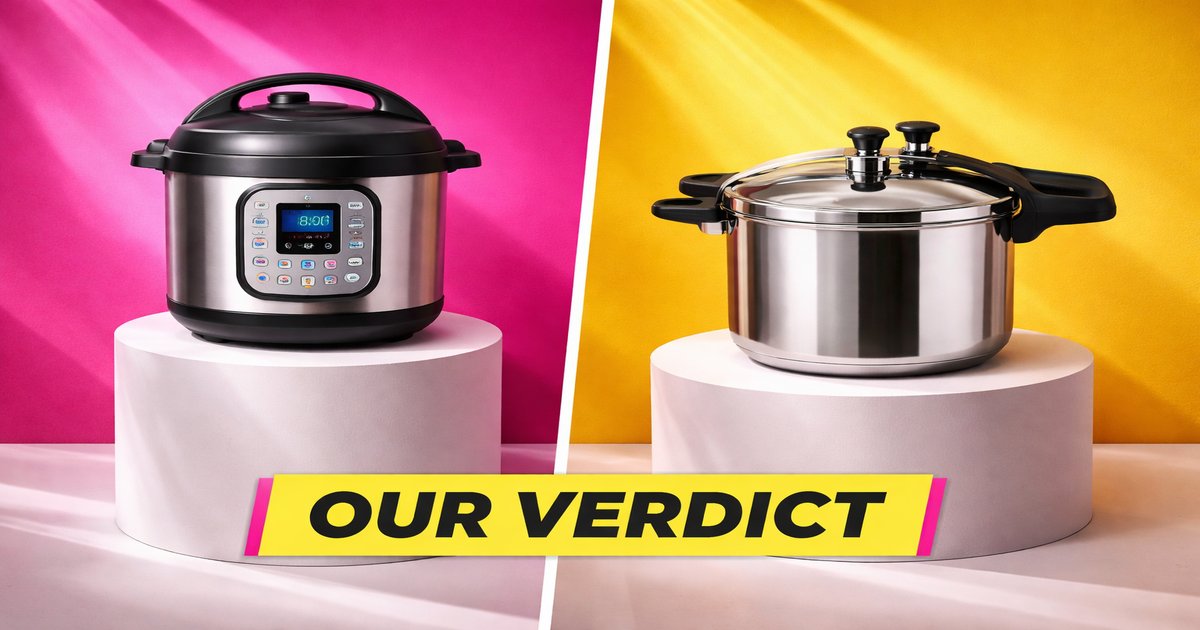
You’re standing in the kitchen aisle, staring down two culinary titans: the Instant Pot and the traditional pressure cooker. Both promise to save you time and make you look like a pro chef, but which one truly delivers on its promises without making you pull your hair out?
| Feature | Instant Pot | Pressure Cooker |
|---|---|---|
| Cooking Functions | 7-in-1 | 1 |
| Ease of Use | ✓ | ✗ |
| Programmable | ✓ | ✗ |
| Manual Release Required | ✗ | ✓ |
| Price Range | $80-$150 | $30-$90 |
| Capacity (Typical) | 6 Quart | 6 Quart |
| Material | Stainless Steel | Stainless Steel/Aluminum |
✅ instant pot Pros
- Multifunctional: It can replace several kitchen appliances.
- User-Friendly: Easy to use with pre-set programs.
- Consistent Results: Maintains even cooking temperatures.
❌ instant pot Cons
- Learning Curve: Initial setup can be confusing.
- Pricey: Higher upfront cost compared to traditional pressure cookers.
- Bulky: Takes up more counter space.
✅ pressure cooker Pros
- Cost-Effective: Budget-friendly option.
- Sturdy Construction: Often more durable due to simpler design.
- High-Temperature Cooking: Can reach higher pressures and temperatures.
❌ pressure cooker Cons
- Manual Operation: Requires more attention during cooking.
- Potential Safety Hazards: Higher risk of accidents if not used properly.
Performance: Convenience vs. Tradition
You want convenience? The Instant Pot is your guy. It’s like having a sous chef that won’t complain about low pay. With its programmable settings, you basically set it and forget it. The traditional pressure cooker, on the other hand, demands more of your attention and skill. Think of it as the old-school master chef—highly effective but requiring a watchful eye and a steady hand, especially when manually releasing pressure.
Build Quality: Tech vs. Toughness
When it comes to build quality, the Instant Pot is more high-tech with its multiple electronic components, and it feels solid enough to withstand frequent use. The pressure cooker’s simplicity in design often translates to durability. If you’re rough on your kitchen gear, the traditional pressure cooker might survive a fall better than its electronic counterpart. But remember, simplicity means fewer parts to break, which is a win for longevity.
Value: Price Tag vs. Versatility
The Instant Pot is an investment. Sure, the upfront cost is steeper, but think of all the appliances it can replace: slow cooker, rice cooker, steamer, and more. If you’re a minimalist or have limited kitchen space, this is a huge plus. The pressure cooker wins in the short-term wallet-friendly department. It’s less expensive and can deliver excellent results if you’re willing to handle the learning curve and manual operation.
Here’s what they don’t tell you: the Instant Pot’s non-stick inner pot can lose its luster and become a pain to clean after a few months of heavy use. Also, the traditional pressure cooker’s gasket and seals can wear out faster than you’d expect, needing regular replacements to maintain safety and effectiveness.
Our Final Verdict: Which One Should You Buy?
If you’re all about multi-tasking and love a gadget that can do it all, the Instant Pot is your kitchen soulmate. Perfect for busy families or tech-savvy individuals who appreciate hands-off cooking. If you’re a traditionalist who relishes the hands-on approach, or you’re looking to save some cash while still cooking up a storm, stick with the classic pressure cooker. It’s ideal for those who appreciate simplicity and can spare the attention while cooking.
How does the Instant Pot handle large meals?
The Instant Pot can handle large meals well due to its capacity and multifunctionality. However, you may need to batch cook if serving more than six people.
Are replacement parts readily available for both?
Yes, replacement parts are generally available for both, but the Instant Pot’s parts might be easier to find online due to its popularity.
Which is more energy-efficient?
The Instant Pot tends to be more energy-efficient as it cooks faster and uses less electricity compared to keeping a stove-top pressure cooker at high heat.