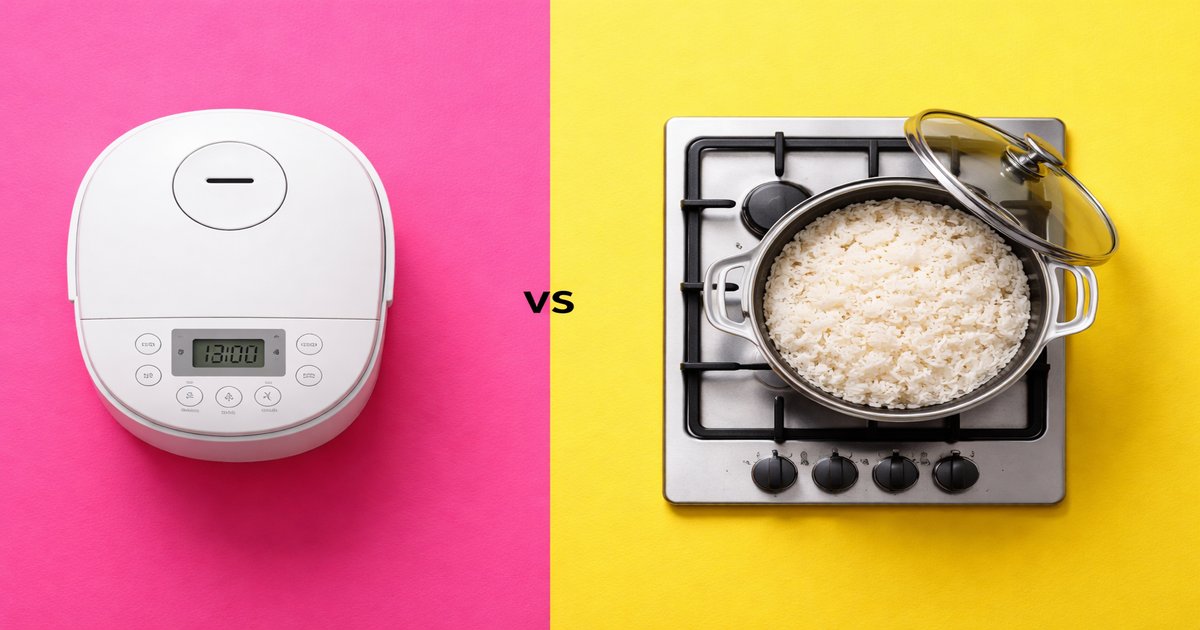
You’re standing in the kitchen, ready to cook a pot of fluffy rice, but you’re torn between using a trusty rice cooker or sticking to the traditional stovetop method. Both have their merits, but which one aligns with your cooking style and needs?
| Specification | Rice Cooker | Stove Top |
|---|---|---|
| Ease of Use | ✓ | ✗ |
| Cooking Time | 20-25 minutes | 15-20 minutes |
| Consistency | ✓ | ✗ |
| Versatility | ✗ | ✓ |
| Energy Efficiency | ✓ | ✗ |
| Cost | $30 – $150 | Varies (depends on cookware) |
✅ rice cooker Pros
- Set-and-forget convenience
- Consistently perfect rice
- Energy efficient
❌ rice cooker Cons
- Single-purpose appliance
- Occupies counter space
- Initial cost for a quality model
✅ stove top Pros
- Versatile for different cooking methods
- No need for additional appliances
- Cost-effective if you already own cookware
❌ stove top Cons
- Requires constant attention
- Inconsistent results without practice
Performance
When it comes to performance, rice cookers win on consistency. You set the timer, and it handles the rest, delivering perfectly cooked rice with minimal effort. The stove top, while potentially faster for experienced cooks, requires constant monitoring to avoid burning or undercooking. If your goal is foolproof rice without babysitting the pot, the rice cooker is your best bet. However, if you’ve mastered the art of stovetop cooking, you can achieve great results and even shave off a few minutes.
Build Quality and Durability
In terms of build quality, rice cookers vary widely. Basic models may not last long, while high-end versions can be robust and last for years. Meanwhile, stove top cooking depends on the cookware. Invest in a good pot, and it can last a lifetime. The rice cooker has more components that can fail over time, like electronics and inner pots, while a solid stovetop pot is mostly indestructible if treated well.
Value and Versatility
A rice cooker is a one-trick pony, but it does that trick exceptionally well. If rice is a staple in your diet, the convenience might be worth the investment. On the other hand, the stove top offers versatility. You’re not just limited to rice; the same pot can be used for soups, stews, and more. If you value multi-functionality and kitchen space, the stove top wins hands down.
Rice cookers have a hidden downside: they can be a pain to clean, especially if you let the rice sit too long after cooking. Stovetop cooking, while more involved, offers the advantage of easy cleanup if you’re using non-stick or stainless steel cookware. Also, rice cookers can struggle with smaller quantities of rice, leading to less-than-ideal results.
Our Final Verdict: Which One Should You Buy?
If you’re someone who eats rice several times a week and values convenience above all else, invest in a rice cooker. It’s perfect for busy individuals or families who want consistent, perfect rice without the fuss. However, if you’re a versatile home cook who enjoys dabbling in various recipes and already has a well-equipped kitchen, stick with the stovetop. It saves space, money, and offers more culinary flexibility.
Can a rice cooker be used for anything other than rice?
Some rice cookers have settings for steaming vegetables or cooking grains like quinoa, but the results may vary. They aren’t as versatile as a stovetop.
Is it cheaper to cook rice on the stove or in a rice cooker?
In terms of energy consumption, rice cookers are more efficient, but the initial cost of a quality model may be higher than using a pot you already own.
How long do rice cookers typically last?
Quality rice cookers can last several years, but cheaper models may only last a year or two. Longevity depends on usage and maintenance.